Egg Freezing - Benefits and Risks for Women
Updated: May 10
Egg freezing is an option available to women whose circumstances (like not having met that special someone) are such that they do not want to start a family now but may wish to do so in the future. Some women may have medical reasons why they have to put off having a family such as needing to undergo treatment for cancer. Others may have social or career reasons.

FERTILITY DEPENDS ON A WOMAN'S AGE
As women get older their fertility (or ability to conceive) decreases.
Female fertility declines gradually starting around age 27, with a more rapid decline after age 35.
CHANCE OF ACHIEVING A PREGNANCY WITHIN 1 YEAR
Early 20’s 86%
35-39 years 52%
41-42 years 4-5%
egg quantity/quality drops, with only ~3% of eggs remaining by age 40.
WHAT IS EGG FREEZING ?
Egg freezing is a method of storing a woman’s unfertilised eggs to allow her to try to conceive at a later date, when natural conception would be unlikely. It may be seen as a way of preserving the possibility of fertility for women who are not in a position to become pregnant straight away, or whose fertility is at risk for medical reasons such as cancer treatment.
Frozen eggs may be stored for many years without significant deterioration. When a woman is ready to use her eggs, they are warmed, and then fertilised with sperm. The aim is for the fertilised egg to develop into an embryo, which can then be transferred to the woman’s uterus giving a chance of pregnancy.

STEPS IN FREEZING, UNFREEZING AND ACHIEVING A SUCESSFUL BIRTH
STEP 1 : FERTILITY ASSESSMENT
The process starts with seeing a fertility specialist who reviews your medical history, undertakes investigation to determine your ovarian reserve and reviews your overall reproductive health.
They will determine your chance of success and what costs will be involved
STEP 2 : OVARIAN STIMULATION
Normally the ovaries produce one egg in a cycle. Hormone injections using an appropriate stimulation protocol are used to stimulate the ovaries to produce many eggs. This process lasts from 10 - 14 days. Monitoring is required during this period to determine that appropriate hormone levels and follicular development have been achieved
STEP 3 : EGG RETRIEVAL
Egg retrieval is a short outpatient procedure using sedation or a light anaesthetic to retrieve the eggs. A thin needle is guided using a transvaginal ultrasound to aspirate an egg from each follicle.
The procedure may take from 15 – 30 minutes and after the procedure a woman may have mild cramping , bloating or spotting.
STEP 4 : EGG FREEZING
After egg retrieval the maturity of the eggs is determined and only those suitable are chosen to be frozen. Rapid Freezing is then undertaken to maintain egg integrity with storage in liquid nitrogen at -196 degrees C .
STE:P 5 : STORAGE
Frozen eggs are stored in the specialised cryogenic tanks until a woman wishes to use them. They can be stored for over 10 years without any significant loss in quality.
STEP 5 : UNFREEZING THE EGGS FOR USE
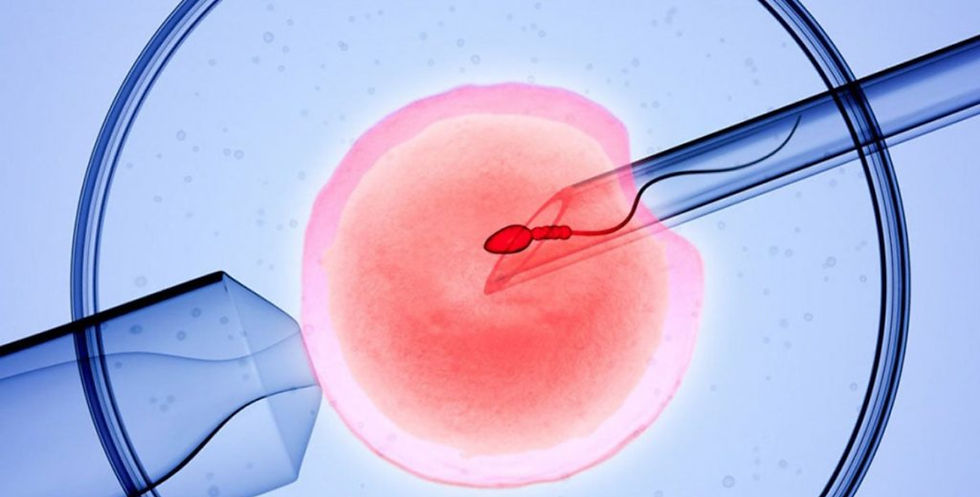
When a woman wants to conceive an egg is thawed and then fertilised by a sperm being injected into the egg by intracytoplasmic sperm injection (ICSI). The last step is transfer of the fertilised embryo into the uterus
RISKS OF EGG FREEZING AND OTHE CONSIDERATIONS
Egg freezing is a relatively safe procedure but there are risks and other considerations that need to be taken into account.
A Major risk is that of Overestimation Syndrome
This complication occurs when the ovaries become swollen from excessive hormonal stimulation. The features include fluid retention, abdominal swelling, abdominal pains, nausea and shortness of breath. Rarely hospitalisation and management of the symptoms is required
Other Complication
These may include mild hormonal side effects including headaches or mood changes .
Rare complications from the egg retrieval may include bleeding, infection or injury to the adjacent and surrounding organs.
The process of egg retrieval freezing, thawing for use may involve significant costs may results in considerable emotional disturbances
FACTORS IN SUCCESS FROM EGG FREEZING TO ACHIEVE A PREGNANCY
There optimal age for freezing eggs is before age 35 which generally results in higher yields in quality of eggs and higher pregnancy rates in the future.
The number of eggs that can be collected plays an important role in future success of fertilisation and live birth outcome.
Outcomes are also influenced by the general health of the woman as well as her ovarian reserve which can be determined by a blood test called AMH (Anti-Mullerian Hormone Levels)

COSTS OF EGG FREEZING
The first year cost of egg freezing which includes cycle fees, medications, and initial storage range from $5,500 to $25,000 with annual storage fees of $300 - $600. Costs vary depending whether the procedure is elective or medically indicated and the amount of the costs that medicare will reimburse. These are current costs and may change. A woman considering egg freezing should confirm what the costs will be before undertking the procedure.


Comments